Why Santa Needs an Elf: The Safeguarding Rule Clarkson's Farm Just Put on Telly
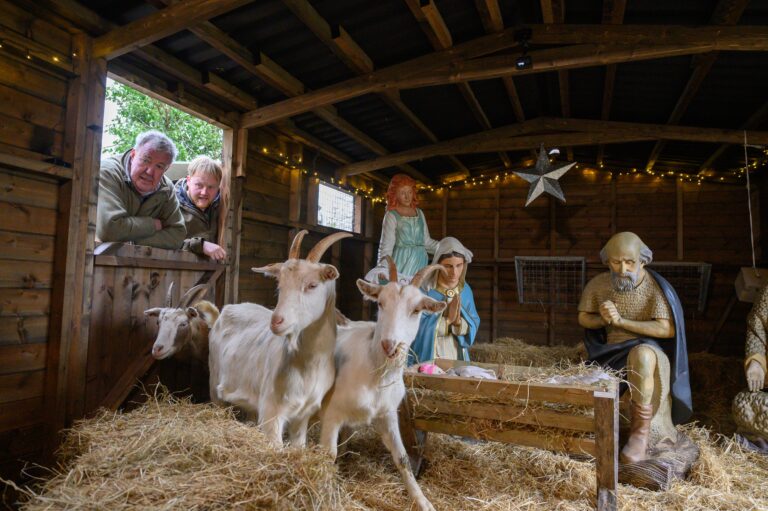
If you’re watching season 5 of Clarkson’s Farm, there’s a moment in episode 2 where Cheerful Charlie sits Jeremy down about the Christmas grotto at the pub. Jeremy wants a Santa. Charlie, being Charlie, has paperwork.
The gag everyone will remember is the DBS check on Father Christmas. The bit that stuck with me was the other one: you also need an elf. A second adult in the room, alongside the child and the parents. That isn’t decoration. It’s safeguarding.
It sounds like the sort of red tape the show loves winding Jeremy up with. It isn’t, though. It’s one of the more sensible rules in child protection, and hardly anyone has it explained to them properly. So here’s what’s going on.
Does Santa really need a DBS check?
Usually no. At least not the big one people picture.
A DBS check (that’s the Disclosure and Barring Service, in England and Wales) comes in levels, and the enhanced one is reserved for what the rules call “regulated activity” with children. To qualify, the work has to pass a frequency test: contact with the same child at least four times in 30 days, or overnight.
A grotto Santa fails that comfortably. He sees each child once, for a minute or two, with a queue of impatient toddlers behind them. He isn’t caring for them or supervising them, either; their parents are right there. So the role usually isn’t even eligible for an enhanced check, and if you insist on one anyway you can end up falling foul of the rules rather than complying with them.
It helps to know what the different checks actually are, because people say “DBS check” as if it’s one thing. There are four. A basic check shows only unspent convictions, anyone can apply for their own, and it costs £21.50. A standard check adds spent convictions and old cautions. An enhanced check adds anything the local police consider relevant, and for work with children it can include a check against the Children’s Barred List, the register of people legally banned from that work. An enhanced check costs £49.50, though it’s free for volunteers. The catch is that only an organisation can request one, and only for a role that genuinely qualifies. You can’t order yourself an enhanced check just because it feels thorough. (One recent wrinkle: since January 2026 a self-employed person can apply for their own enhanced check through an umbrella body, so a professional Santa who does this for a living now has a route they didn’t have before.)
For a pub Santa, the honest answer is that a basic check is the most that makes sense, and even that is optional. Plenty of the bigger operations get one as standard anyway: garden centres, shopping centres, the large paid grottos. It’s quick, anyone can get one, and it’s fair reassurance. But it isn’t a legal must for someone who works a fortnight a year.
So Charlie raising it is fair enough. Where the scene slightly misleads is the emphasis, because the check is the least important part of keeping a grotto safe.
The real rule: Santa is never alone with a child
This is the elf’s whole job. The cornerstone of safeguarding was never the certificate. It’s the principle that an adult is never alone and unobserved with a child.
A certificate tells you about someone’s past. A second person in the room shapes what can happen right now, and it does that for the people who’d never put a foot wrong as much as the rare one who might.
For a grotto that means one concrete thing: Santa always has at least one other person with him while children are around. Call them the elf, the helper, the photographer, whatever you like. They sit in the room as an ordinary, constant witness. Ideally they’ve had a basic check too, since they’re in contact with the children as well. And the elf is there on top of the parent or carer, never instead of them.
Keeping parents in the room runs on the same logic. The more open and watched the space, the safer it is. Good grottos aren’t tucked away down a corridor; the door stays open, you can see in, and nobody is ever behind a closed door one to one.
You’ll also notice a lot of grottos have quietly dropped the old “sit on Santa’s knee” routine. Some still offer it, but only with the parent’s say-so and the parent right there. Same instinct at work: cut down the moments where a child is in close contact with an adult and nobody’s watching.
None of this assumes the worst of the bloke in the red suit. The point is that a good system shouldn’t have to assume the best of anyone either. The elf protects the child, and it protects Santa too, because a room with two adults and a parent in it gives a misunderstanding or a false accusation nowhere to take root.
Where these rules actually come from
It’s easy to roll your eyes at all this, the way the show rather invites you to. It helps to know it didn’t appear out of thin air.
The modern vetting system traces back to a real failure. In 2002, two ten-year-old girls, Holly Wells and Jessica Chapman, were murdered in Soham by a man who worked as a caretaker at their school. He had a documented history of allegations, but that information was never passed to the people who hired him. The inquiry that followed, led by Sir Michael Bichard, found that police vetting and the sharing of intelligence between forces had badly let everyone down.
What grew out of that is the system we have now. The recommendations led to a central vetting and barring scheme, and in 2012 the old Criminal Records Bureau and the Independent Safeguarding Authority were merged into the Disclosure and Barring Service. The barred lists, the enhanced checks, the whole apparatus Charlie is gesturing at across the table: it all exists because trusting the wrong person once carried a terrible cost.
That’s also the clearest argument for why the elf matters more than the certificate. Soham was, among many other things, a reminder that paperwork can miss what a watched, open room would have caught.
What if the parents aren’t there?
Everything above leans on one assumption: the parent or carer is in the room. That single fact is why a grotto Santa counts as low risk and usually needs no check at all. So what happens when it isn’t true? Picture a school grotto where pupils file in without their parents, or an event where the kids get dropped off.
The picture changes, in two directions.
Legally, the moment a child sees Santa without a parent, Santa and his helpers stop being entertainers and start supervising and caring for that child themselves. That’s the sort of activity that can tip into “regulated activity”, which is what makes an enhanced DBS check available, and sometimes required. Whether it actually crosses the line depends on how often it happens (roughly four or more days in 30, or weekly, or overnight) and where (a school or nursery counts automatically). A one-off pub grotto probably still won’t get there. A school running its own grotto for unaccompanied pupils very likely will, though in that setting the staff usually hold the right checks already.
In practice the legal line barely matters, because the risk has gone up and your responsibilities with it. The elf is no longer good practice; it’s the whole ballgame. That second adult is now the only independent pair of eyes in the room, with no parent to provide the oversight that made the thing safe to begin with. As the host, you’ve also picked up a duty of care you didn’t have five minutes earlier. You need to know which adult each child belongs to, sign them in and back out again, get consent, and keep the adult-to-child numbers sensible. And those basic checks go from “nice reassurance” to “honestly, just do it”.
So if the parents aren’t in the room, don’t tell yourself Santa doesn’t need a check. You’re running childcare now, so treat it like childcare.
What this means if you’re running a grotto
If you ever end up in Jeremy’s shoes, wanting a Santa in your pub or shop or village hall, the checklist is short and worth doing properly:
- Pick a Santa you’d be glad to have around children, and take a reference or two. A short, informal chat does most of the work.
- Think about a basic DBS check. It isn’t required for a one-off seasonal Santa, but it’s easy reassurance and plenty of venues ask anyway.
- Always have a second adult in the room. This is the one you never skip. Santa is never alone with a child.
- Keep the parents close and encourage them to stay for the visit.
- Keep the space open and visible. No closed doors, no hidden corners, no one to one.
- Write down a basic safeguarding policy. Even a single page is enough, so everyone knows how to behave and what to do if something feels off.
The paperwork differs a bit around the UK (Scotland has Disclosure Scotland and the PVG scheme, Northern Ireland has AccessNI), but the principle is the same wherever you are.
The questions people actually ask
Do the elves and helpers need checking too? If they’re in contact with the children, the same logic applies to them as to Santa. A basic check is sensible, and if your Santa is the one being checked, it’s a bit odd to skip the person standing next to him for an hour.
What about the photographer? Same answer. Anyone who’s regularly in the room with children is part of the picture, so fold them into whatever you decide on references, checks and the open-door setup.
Can I just use a check Santa already has? Maybe. A basic check is a snapshot from the day it was issued and can’t be kept up to date, so an old one tells you less than a fresh one. Standard and enhanced checks can be kept current through the DBS Update Service, but only if the person subscribed to it and gives you permission to look. When in doubt, a new basic check is cheap and quick.
How long does a check take, and how do I get one? You apply for a basic check yourself on gov.uk for £21.50, and it usually comes back within a couple of weeks. Enhanced checks are requested by the organisation, not the individual, cost £49.50, and are free for volunteers. Don’t leave any of this to the second week of December.
Is Santa allowed to have a child on his knee? Only with the parent’s consent and the parent present, and plenty of grottos have dropped it altogether in favour of a chair alongside. It’s a small change that removes an obvious bit of risk, and most children don’t notice the difference.
The bit the show got right
What I like about the scene is that it teaches something almost by accident. The joke is that even Santa has to fill in a form. The reassuring part is that the form was never the thing keeping children safe. The elf is. A second pair of eyes in that room does more than any certificate, and it costs you nothing but a spare set of pointy shoes.
So if you’re booking a Father Christmas this year, run the basic check by all means. But whatever else you do, get him an elf.
Ready to apply for your DBS check as a sole trader?
Self-employed-dbs.co.uk processes Enhanced and Standard DBS applications for self-employed workers in England and Wales. No employer needed.
This guide applies to self-employed workers in England and Wales only. Self-employed workers in Scotland should apply through Disclosure Scotland. In Northern Ireland, the equivalent service is AccessNI. This page is for guidance only and does not constitute legal advice. If you have questions about your specific circumstances, contact our support team or consult a qualified legal adviser.