DBS checks are set to become cheaper from Monday 5th October 2026. The Disclosure and Barring Service has announced lower fees for Basic, Standard and Enhanced checks, alongside a reduction in the annual cost of its Update Service.
We welcome the announcement. Lower DBS fees will reduce the government charge paid by applicants and employers, with the largest saving going to those who need an Enhanced check. DBS has also confirmed that the reductions will not affect the quality of its service or the rigour of its checks.
The changes were announced on 9 September 2026 in the official DBS fee announcement on GOV.UK.
What are the new DBS fees?
The following DBS fees take effect from 5 October 2026:
| Check or service | Current DBS fee | DBS fee from 5 October 2026 | Saving |
|---|---|---|---|
| Basic DBS check | £21.50 | £20.00 | £1.50 per check |
| Standard DBS check | £21.50 | £20.00 | £1.50 per check |
| Enhanced DBS check | £49.50 | £41.00 | £8.50 per check |
| Update Service subscription | £16.00 per year | £15.00 per year | £1.00 per year |
These are the fees charged by DBS. If you apply through a provider, its administration fee may be added to the relevant check fee.
Eligible volunteer checks will continue to be free of the DBS fee.
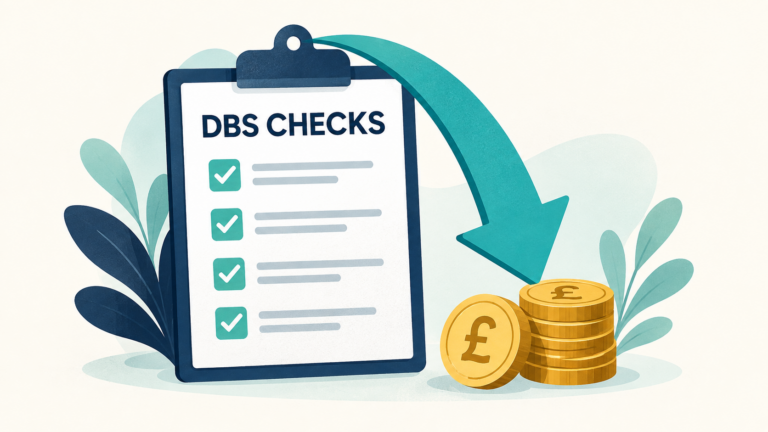
Enhanced DBS checks see the biggest saving
The Enhanced DBS fee will fall by £8.50, a reduction of approximately 17.2%. This is the largest reduction announced, both in pounds and as a percentage of the existing fee.
For someone paying for their own Enhanced check, that means a lower government fee for their application. For employers arranging multiple checks, the savings add up. As an illustration, 100 paid Enhanced checks at the new rate would carry £850 less in DBS fees than the same number at the current rate, before any provider administration charges.
Basic and Standard checks will each cost £1.50 less in DBS fees, while the annual Update Service subscription will fall to £15.00.
How to apply for a self-employed DBS check
Applying for an individual DBS check as a self-employed person follows five steps. The process is the same whether you need a Standard, Enhanced, or Enhanced with Barred List check.
Check eligibility
You must be paid and in a qualifying role. Volunteers are not covered.
Register an account
Self-employed applicants cannot submit directly to the DBS.
Complete application
Personal details, 5 years of addresses, and your role information.
Verify your identity
Digitally via biometric passport or EU ID card, or with standard documents.
Receive your certificate
Posted directly to you. Show the original to your client or parent.
Lower fees with the same standards
DBS has explicitly confirmed that the fee reduction will not affect its standard of service or the rigour of its checks. That reassurance matters for the employers and organisations that rely on those checks as part of their recruitment and safeguarding processes.
DBS is funded entirely by the fees it charges for these products and services. It reviews those fees annually, with each fee based on the cost of delivering the relevant product or service under the government’s Managing Public Money requirements.
Following this review, DBS says it has been able to reduce fees across all the products and services covered by the announcement. We support that reduction in costs alongside its commitment to maintaining standards.
The new fees have been scrutinised and approved by the DBS board, the Home Office, HM Treasury and the Minister for Safeguarding and Violence Against Women and Girls. The announcement states that they will be given legal effect through a statutory instrument laid before Parliament on 9 September 2026.
What applicants and employers should check
When comparing prices, distinguish between the DBS fee and the total amount charged by a provider. Registered Bodies and Responsible Organisations may charge an administration fee in addition to the government fee. DBS does not set or regulate those administration charges, so a provider’s advertised price may be higher than the figures above.
DBS has asked Registered Bodies and Responsible Organisations to update their systems and customer-facing information before 5 October 2026 to reflect the new fees.
If you’re budgeting for checks from October onwards, use the new DBS rates and confirm any separate charges with your provider. That will give you a clear view of the total cost and how the reduction affects your applications.
At self-employed-dbs.co.uk, we’ll update our prices from 5 October 2026 to reflect the new DBS fee structure.
Ready to apply for your DBS check as a sole trader?
Self-employed-dbs.co.uk processes Enhanced and Standard DBS applications for self-employed workers in England and Wales. No employer needed.