Regulated activity is the legal concept that determines who needs an Enhanced DBS check with a barred list element, and who is legally prohibited from working with children or vulnerable adults. Whether your role constitutes regulated activity is the most important eligibility question when applying for an Enhanced check as a self-employed worker.
This guide explains what regulated activity means for both children and adults, how the frequency and nature tests work, what falls outside the definition, and what it means in practice for self-employed workers across different sectors.
The Legal Definition of Regulated Activity
Regulated activity is defined in Schedule 4 of the Safeguarding Vulnerable Groups Act 2006, as amended by the Protection of Freedoms Act 2012. It covers two categories of work: regulated activity with children and regulated activity with adults.
The concept exists to identify roles where a person has, or could have, close and unsupervised contact with children or vulnerable adults in a way that creates a meaningful safeguarding risk. Roles that fall within this definition require a higher level of vetting than roles that do not, because the potential consequences of an unsuitable person being in such a role are more serious.
Only people working in regulated activity are eligible for an Enhanced DBS check with a barred list check. The eligibility requirement exists because the barred list check is specifically designed to identify individuals who are legally prohibited from working in regulated activity. Applying a barred list check to a role that does not involve regulated activity would be disproportionate and is not permitted under the legislation.
Regulated Activity With Children
Regulated activity with children covers a range of specified activities involving direct contact with under-18s. The core activities are: teaching, training, instructing, caring for, or supervising children; providing advice or guidance on well-being; driving a vehicle for children; and working in certain establishments such as schools, children’s homes, and early years settings.
For most of these activities, the frequency test determines whether the role constitutes regulated activity. The frequency test is met when the activity happens on three or more occasions within any 30-day period, or at any time between 2am and 6am. A one-off session or an occasional engagement does not automatically constitute regulated activity, although repeated contact over a short period can tip a role into the definition.
Some activities constitute regulated activity regardless of frequency. Teaching a child, providing healthcare, or providing personal care for a child are regulated activity from the very first occasion, because the nature of the activity itself creates the safeguarding concern rather than the frequency of contact. A private tutor who teaches a child once a week falls within this category from the outset.
The supervision test is also relevant. A person carrying out otherwise regulated activities is not in regulated activity if they are under the regular supervision of someone who is themselves subject to regulated activity checks. However, a self-employed worker visiting a client’s home unsupervised is not subject to this exception.
Regulated Activity With Adults
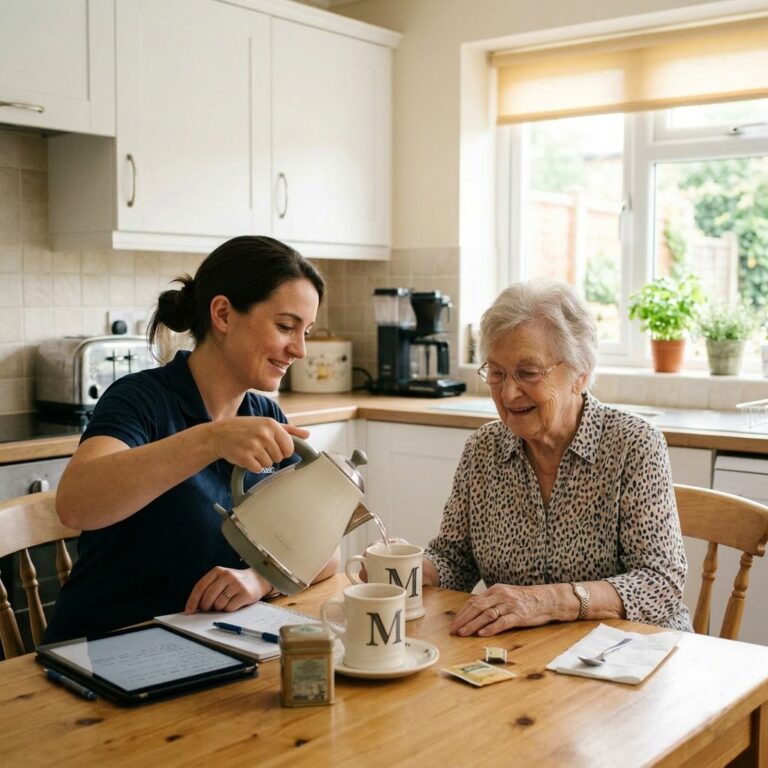
Regulated activity with adults covers activities involving personal care, healthcare, and social work provided to adults who need it because of their age, illness, or disability. The focus is on the activity, not the setting or the label attached to the person receiving it.
Activities that constitute regulated activity with adults include: providing personal care such as bathing, dressing, or assistance with toileting; administering medication or providing healthcare; carrying out social work in connection with a vulnerable adult; assisting with cash, bills, or shopping; transporting a person because of their age, illness, or disability; and providing assistance in the conduct of affairs by means of a lasting power of attorney or deputyship.
The definition also covers working in specific settings where the residents or service users are, by reason of the setting, likely to receive personal care or healthcare. A care home, a hospital, a hospice, and a residential special school are examples of regulated activity establishments.
Unlike the children’s definition, regulated activity with adults does not require a frequency test for most of the specified activities. Providing personal care to an adult who needs it by reason of age, illness, or disability is regulated activity from the outset, regardless of how often it occurs.
The Frequency and Nature Tests in Practice
There are two routes by which someone can be placed on a barred list: automatic barring and discretionary barring.
Automatic barring applies where a person is convicted of, or cautioned for, one of a specified set of serious offences. These offences include the most serious sexual and violent offences against children and adults. On conviction or caution for such an offence, the person is automatically added to the relevant barred list without any separate review by the DBS. For the most serious offences, there is no right to make representations and the bar is permanent.
Discretionary barring applies where the DBS receives information about a person and considers whether, based on that information, the person poses a risk of harm in regulated activity. This can result from a referral by an employer, a regulatory body, or a professional organisation, or from information arising through the criminal justice system. In discretionary cases, the person has the right to make written representations to the DBS before a final decision is reached, unless the case falls into the auto-bar category.
The DBS assesses the information it holds and decides whether to include the individual on a list, considering the risk they pose and the likelihood of harm in the future. The decision-maker is the DBS’s barring casework team, not a court. This means someone can be barred on the basis of information that would not necessarily result in a criminal conviction.
Employers and organisations have a legal obligation to refer an individual to the DBS when they dismiss or remove them from regulated activity because of harm caused, or risk of harm, to children or vulnerable adults. Referrals can also be made where the person leaves voluntarily but would have been removed had they not done so. Failing to make a mandatory referral is a criminal offence.
What Is Not Regulated Activity
Not every role that involves contact with children or vulnerable adults constitutes regulated activity. Several categories are explicitly excluded or fall outside the definition.
Activities carried out under the regular, day-to-day supervision of someone who is in regulated activity are not regulated activity. This exception applies primarily to supervised volunteers in organisational settings, not to self-employed individuals working in private homes.
Purely remote contact, for example delivering coaching sessions by video call only, without any in-person contact, does not constitute regulated activity under the current definition. The legislation focuses on physical proximity and the opportunity for unsupervised contact rather than on communication via technology.
Incidental contact, where a person happens to come into proximity with a child or vulnerable adult in the course of work that is not directed at them, does not constitute regulated activity. A contractor repairing a roof on a school building does not become a regulated activity worker simply because children are present in the building below.
It is important to assess each role individually rather than relying on job titles. The activity itself is what matters, not what the role is called.
What This Means for Self-Employed Workers
For self-employed workers, the regulated activity question is central to their DBS eligibility. An Enhanced check with a barred list element is only available where the role constitutes regulated activity. If the role does not meet the definition, a Standard check may still be appropriate, but the barred list element cannot be included.
Most self-employed workers who are asked for a DBS check by clients or parents are in roles that do constitute regulated activity. A private tutor teaching children in their home meets the definition. A self-employed carer providing personal care for an adult at home meets the definition. A childminder looking after children in their own home meets the definition.
The self-employed route opened by the January 2026 legislative change applies specifically to paid self-employed workers in regulated activity. Workers who are not in regulated activity do not have access to the Enhanced route through this platform, although they may still be able to apply for a Standard check where appropriate.
If you are unsure whether your role constitutes regulated activity, the FAQ page includes further guidance on eligibility for different occupations.
Checking Whether You Are on a Barred List
Individuals have the right to ask the DBS whether they appear on either barred list. This is done through a subject access request under the UK General Data Protection Regulation. The DBS will confirm whether you are included on the Children’s Barred List, the Adults’ Barred List, or both. It will not provide detailed reasons in the standard subject access response.
This right exists because individuals have a legitimate interest in knowing their own status before applying for a role, rather than discovering it when an Enhanced check is carried out on behalf of an employer or client. If you are barred and unaware of it, applying for a role in regulated activity and having the check reveal your barred status is a situation most people would prefer to avoid. Checking proactively allows you to seek advice before applying.
If you believe you have been wrongly placed on a barred list, you can appeal to the Upper Tribunal on the grounds that the DBS made a legal error or a factual mistake. Appeals must be made within three months of the barring decision. The process is managed through the DBS and, where required, through the Upper Tribunal. Legal advice is strongly recommended before pursuing a barring appeal.
If you are unsure whether your role qualifies, our self-employed DBS checks page explains the eligibility criteria and how to apply.
Common Questions About Regulated Activity
- Is a private tutor carrying out regulated activity?
A private tutor who teaches children on a regular basis is almost certainly carrying out regulated activity. Teaching is one of the specified activities listed in the legislation, and it does not require a frequency threshold in the same way that other activities do. A tutor working with a child more than three times in any 30-day period, or on a regular and unsupervised basis, would be carrying out regulated activity with children.
- Does regulated activity apply to unpaid volunteers?
Yes. The regulated activity framework applies to both paid workers and volunteers. However, the DBS check route available to self-employed workers since January 2026 applies to paid workers only. Volunteers who carry out regulated activity obtain their checks through their supervising organisation under a separate process.
- What is the frequency test for regulated activity with children?
Some activities only constitute regulated activity if they happen frequently. The frequency test is met if the activity takes place on three or more days in any period of 30 days, or at any time between 2am and 6am, or if the person has the opportunity to have unsupervised contact with the child on more than two days within any 30-day period. Some activities, such as teaching or treating a child, are regulated activity regardless of frequency.
- What counts as a vulnerable adult for regulated activity purposes?
The Safeguarding Vulnerable Groups Act 2006 uses the term ‘adults at risk’ rather than ‘vulnerable adults’ in some contexts. For regulated activity purposes, the focus is on the activity rather than a fixed definition of the person. Personal care, healthcare, social work, and related activities with adults constitute regulated activity with adults, regardless of whether a specific vulnerability threshold is formally applied.
- If I supervise someone who works with children, am I in regulated activity?
If your primary role is to directly supervise or manage someone who is themselves in regulated activity, your role may also constitute regulated activity depending on the regularity and nature of your contact with children. The legislation covers individuals who hold a position of responsibility over people working in regulated activity, as well as those directly carrying out the activities themselves.
- Can a self-employed cleaner be in regulated activity?
A cleaner working in a school or care home could be in regulated activity if their role involves unsupervised contact with children or vulnerable adults on a regular basis, even if cleaning is not itself a listed activity. The key question is whether the work results in the opportunity for regular, unsupervised contact with the relevant group. A cleaner working exclusively in unoccupied areas would not meet this test.
This guide applies to self-employed workers in England and Wales only. Self-employed workers in Scotland should apply through Disclosure Scotland. In Northern Ireland, the equivalent service is AccessNI. This page is for guidance only and does not constitute legal advice. If you have questions about your specific circumstances, contact our support team or consult a qualified legal adviser.
Apply for Your Enhanced DBS Check
Self-employed-dbs.co.uk processes Standard and Enhanced DBS applications for paid self-employed workers in England and Wales. No employer needed. Apply online with digital ID verification available.